Blog · 24 SEP · 5 min read
Koji: Japan's quiet ferment, in an Indian kitchen
The mould behind miso, soy and sake. What it does, and why we keep reaching for it.
Koji is rice or barley inoculated with a friendly mould called Aspergillus oryzae. In Japan it has been the backbone of miso, soy sauce, mirin and sake for over a thousand years.
What koji actually does
As it grows, koji releases enzymes that break starches into natural sugars and proteins into savoury amino acids. In plain words: it makes food sweeter and more umami on its own, with nothing added.
Shio-koji, the everyday version
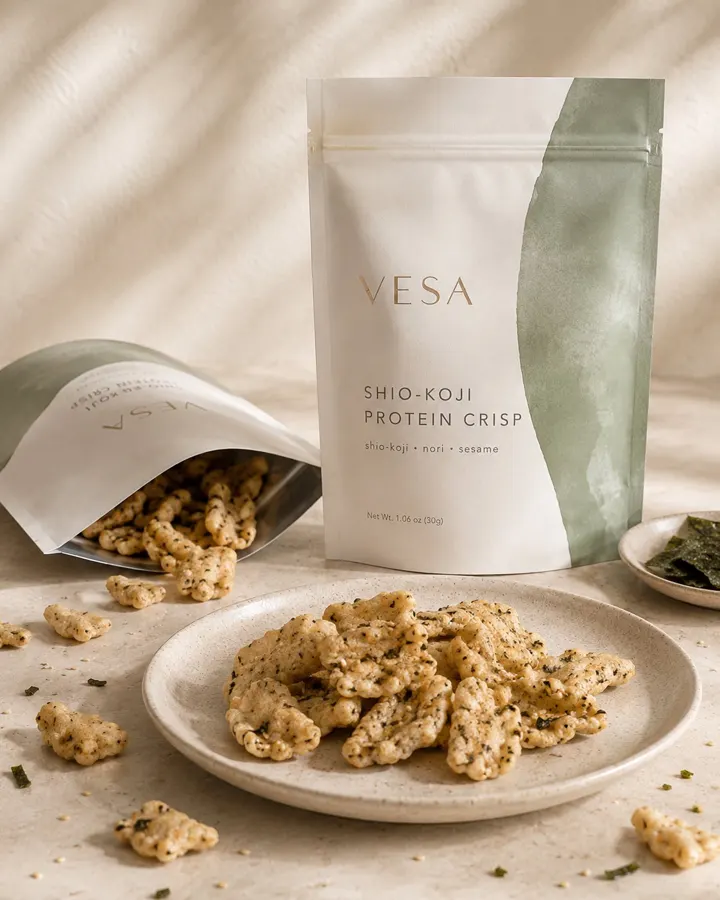
Mix koji with salt and water, leave it to ferment, and you get shio-koji, a seasoning that tenderises, deepens and rounds out almost anything it touches.
Why it fits Indian food
Indian cooking already loves fermentation: idli, dosa, dhokla, achaar. Koji speaks the same language. It lets us build bold, savoury flavour into snacks and sweets without leaning on extra sugar, fat or flavourings.